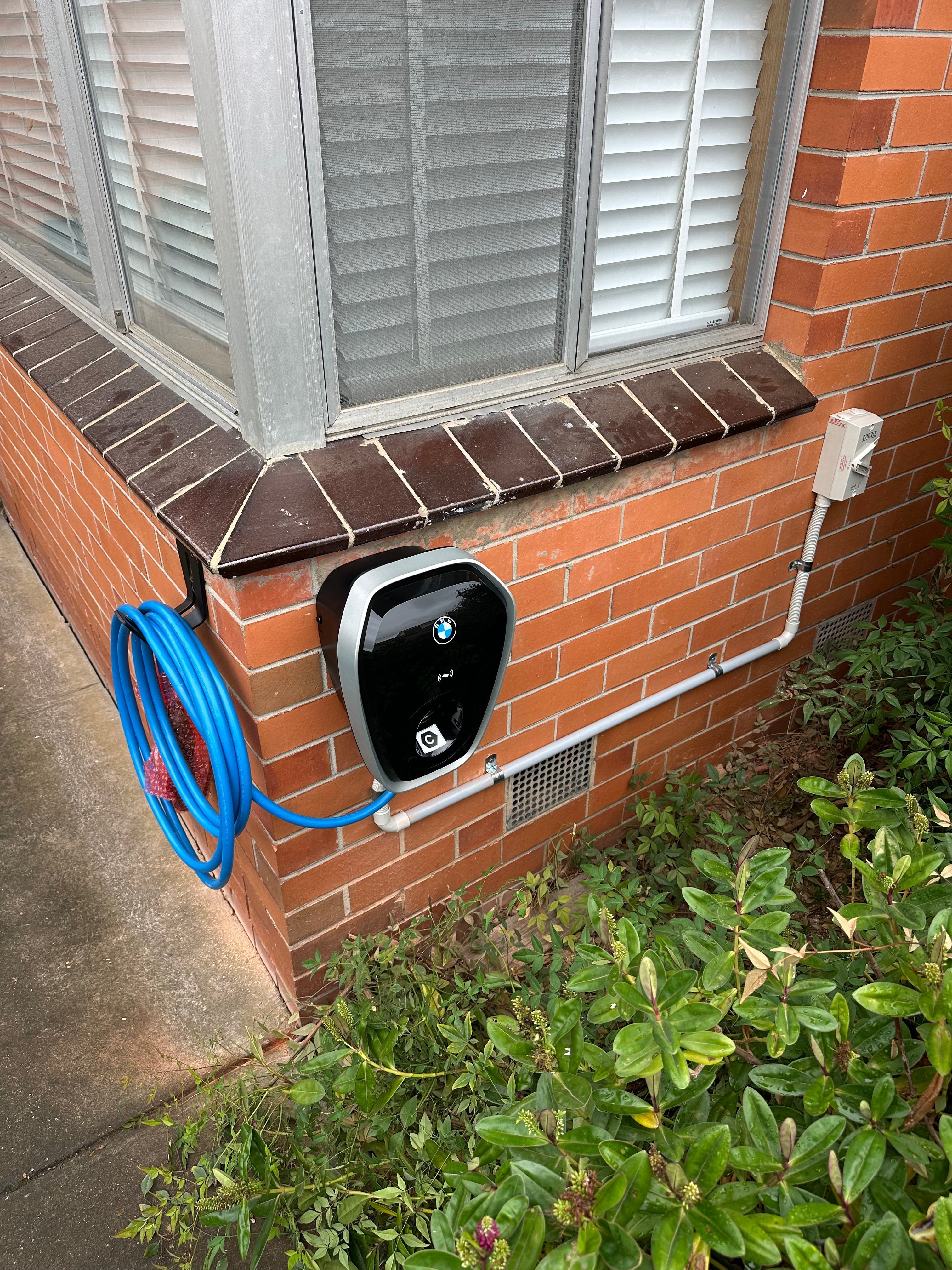
What’s Required for a Home EV Charger
Installing an EV charger isn’t just mounting it to a wall — there are a few key requirements:
1. Dedicated Circuit
EV chargers must be on their own circuit to handle the load safely.
2. Correct Protection (This is where a lot of installs go wrong)
Depending on the charger:
-
Type A RCBO – if the charger has built-in DC protection (most modern units, including BMW/Tesla)
-
Type B RCD – only if the charger doesn’t have DC protection
Getting this wrong can either:
- Cost the customer unnecessarily (Type B is expensive), or
- Leave the install non-compliant
3. Cable Route & Finish
Good installs aren’t just safe — they look clean:
- Straight conduit runs
- Minimal visual impact
- Proper sealing and support
🔌 BMW Wallbox Chargers – Are They Good?
BMW wall chargers are solid units:
- Reliable and simple to use
- Usually include DC protection
- Suitable for most homes
They’re not overly complex, which actually suits most homeowners.
Common Questions We Get
Can it be installed outside?
Yes — as long as the charger is rated for it and installed correctly (like this one).
Does it need extra wiring for smart features?
No — most communication (apps, scheduling, etc.) runs over Wi-Fi, not extra cabling.
Can it work with solar?
Yes, but:
- That depends on the charger and setup
- More advanced setups may require integration or smart configuration
Why This Install Matters
A lot of EV charger installs we come across:
- Use messy cable runs
- Overcomplicate protection
- Or don’t consider usability
This one is a good example of how it should be done:
- Clean
- Compliant
- Practical
EV Charger Installation in Melbourne
At Blunt’s Electrical, we install EV chargers across Melbourne with a focus on:
- Clean finishes
- Clear pricing
- No overcomplication
We can:
- Supply and install chargers
- Install customer-supplied units
- Advise on the right setup for your home
Book online or request a quote today